Secular record labels' influence on CCM industry questioned in documentary series

A Christian musician and YouTube filmmaker is raising questions about the business practices behind contemporary Christian music (CCM), arguing that secular record labels often influence the type of music that faith-based artists write and perform.
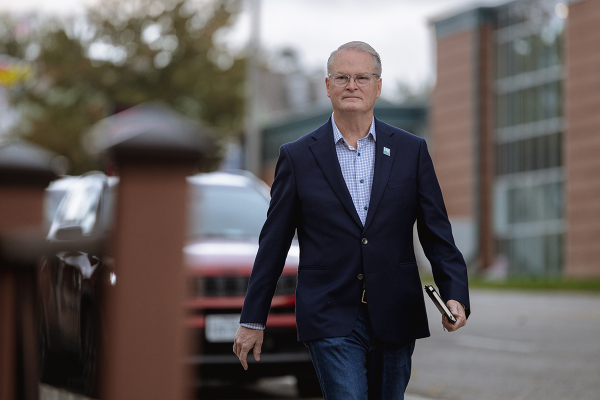
Jonathan Allen Wright, creator of the YouTube documentary series “The Untold History of CCM,” said in an interview with The Christian Post that he wants to encourage people to think more carefully about how worship music is produced and distributed.
“I just want people to think about it more than maybe they have considered in the past,” he said. “But I do want people to understand that I love Christian music and that I love the Church and that I think there are so many amazing CCM artists out there and so many amazing churches that are doing amazing work.”
Watch the interview with Jonathan Allen Wright below:
Wright, who grew up in the Church and whose father was a pastor for most of his life, said his interest in CCM grew out of his experience as a musician and his curiosity about the business behind the songs.
After recording music on a small scale and meeting artists who later signed record deals or began leading worship at larger churches, Wright said he became curious about songwriting sessions, contracts and other parts of the industry that many churchgoers rarely consider.
“I just realized that there's so much more than people understand that goes on naturally behind closed doors,” the content creator explained. “And so, that kind of started the intrigue.”
As he researched the subject for his YouTube channel, he realized there was enough material to develop a series. The project became a 10-episode documentary that can also be watched as a single video lasting about five hours.
According to Wright, one of his biggest concerns is the influence that secular labels have on Christian music.
“Universal, Sony and Warner own practically everything that the Church tends to sing. And that concerns me not so much that there's a function or an industry around it, but that does change the pressure on the artists and the people writing the songs,” he argued.
“Because then there's a money factor that enters the picture where a major label that may not care about the Church the same way a smaller Christian label would is applying a pressure of, ‘We gave you money to write a worship album. We need it to sound this specific way. We need it to fit these certain parameters, or it's not going to sell,’ and that's what they care about,” Wright continued.
Songwriting sessions in Nashville and Los Angeles can operate much like those in the broader music industry, he added, with contracts and financial arrangements that may not reflect what people expect from a Christian ministry.
Wright also voiced concern for songwriters who may feel unable to speak publicly about industry practices because doing so could jeopardize their contracts, saying that some songwriters thanked him after watching the series because they felt unable to speak as openly about their experiences while working in the industry.
The content creator said he wanted to approach those issues with compassion, recognizing that artists and songwriters can find themselves in difficult situations while trying to create music they love.
“I just want people to know that I love Jesus, that I love the Church, and that I want us to consider what we bring inside of the Church and how we deal with things like money and deals and honesty,” Wright said.
Despite his concerns, Wright said he sees reasons for optimism, particularly in the growing number of independent Christian artists who can produce and distribute music without signing with a major label.
He pointed to the accessibility of recording equipment and digital distribution platforms, which allow musicians to record songs on a laptop, release them through streaming services and sell physical copies without relying on a record company.
Wright said some signed artists are increasingly questioning traditional record deals and seeking arrangements that better reflect the current music industry, including the role of streaming services and live performances.
“There's a lot of great things happening simply because stuff isn't as in the dark or cloudy as it used to be, whether that's due to technology or accessibility,” the documentary series creator said.
Samantha Kamman is a reporter for The Christian Post. She can be reached at: samantha.kamman@christianpost.com. Follow her on Twitter: @Samantha_Kamman