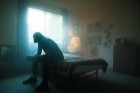
A prayer from Kyiv at 3 am: My night under fire in Ukraine’s capital

It’s 3:00 a.m., or maybe 3:15. I just know it’s far too early to be awake.
I’m pulled out of sleep by a loud sound.
Boom.
Maybe thunder?
Boom. Boom.
I’ve heard this before while visiting soldiers and caregivers near the front lines in Ukraine. But this is Kyiv — the capital of a European democracy.
My windows rattle. The walls shudder. My chest tightens.
Then the air alert cuts through the night. My phone lights up: Seek shelter.
Boom.
My palms are wet. My heart pounds through my ribs. My breathing shortens. The darkness presses in.
I have traveled to Ukraine many times since the full-scale invasion began, working with displaced people, soldiers, chaplains, and those caring for the wounded. But each time I return home, it becomes easier to forget.
The distance softens the urgency. The war becomes something happening somewhere else — to someone else.
Until a night like this.
3:20 a.m.
I’m praying, but I’m also calculating.
Should I lie flat on the floor?
If I pull a mattress over me, will it stop shrapnel?
Should I go to the bathtub?
The nearest shelter is a subway station five minutes away.
I don’t move. I can’t.
“God, make it stop.”
There is no polished theology at 3 a.m. Only bargaining and pleading.
I am not afraid to die. But I do not want to die.
There is more work to be done.
There are people to serve.
There is a country that is bleeding.
“Lord, you are my light and my salvation. Whom shall I fear?”
Boom. Boom.
3:30 a.m.
A text message appears: I hope you’re in a bomb shelter right now.
I don’t have the strength to reply.
Instead, I open Psalm 23 on my phone. The glow of the screen is the only light in the room.
“You prepare a table before me in the presence of my enemies.”
Presence. Not absence.
I breathe in slowly.
I breathe out slower.
Gradually, my breathing steadies.
3:45 a.m.
The air alert is still active. Reports begin to come in. Missiles and Iranian-made drones across the country — Kyiv, Kharkiv, Odesa.
Most are intercepted. Some are not.
Civilians are dead. Infrastructure is damaged.
This is the reality of war in Ukraine — a war they did not start, but one they must carry in their bodies and in their nervous systems.
4:00 a.m.
I am still awake. And I am still alive.
Now the weight of that settles in.
I am alive while others are not.
I live in the United States. I can come and go. Many cannot.
In one part of the world, people wake to alarm clocks.
Here, they wake to explosions.
I am alive to bear witness to what this war does to ordinary people, and to refuse to let it become background noise.
As this war stretches on, it is becoming normal to the outside world. Another headline. Another update. Another conflict competing for attention.
But this is not normal.
When suffering becomes background noise, it becomes easier to ignore. When it is ignored, it is prolonged. And when it is prolonged, more lives are lost, more families are shattered, and more trauma is carried into the next generation.
If you are reading this, I invite you to respond.
Pray for the people of Ukraine, but don’t stop there.
Speak about what is happening.
Refuse to let it be forgotten.
Stand with those who have no choice but to endure it.
Let your compassion become action.
Andrew Moroz is a Ukrainian-American pastor and the founder of The Renewal Initiative.