

Silence in the pulpit and the pew

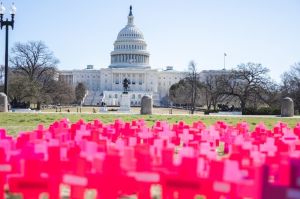
January is Sanctity of Life month, when followers of Christ publicly recognize the value of every human life from the moment of conception to natural death. This remembrance was first recognized in January 1984 by President Ronald Reagan, who designated January 22 as the first National Sanctity of Human Life Day.
As CEO of pro-life ministry Save the Storks, I have attended several March for Life events at the national and state levels. I have volunteered at a pregnancy resource center in Los Angeles and with a foster family agency in California as a mentor to young children and teens. My own story of adoption at birth, and as a foster and adoptive mother, contributes to my passion to build awareness for life-affirming programs.
I continue to be encouraged walking alongside Christian young people at the March for Life in Washington DC. But I ask myself what will it take to get more Evangelical church leaders to stand for life.
I see staff members at pregnancy clinics across the country, tirelessly serving women facing unplanned pregnancies, and wonder why the majority of local churches aren’t supporting these critical ministries in their own communities. With the partnership of local churches, these clinics could multiply their impact and ensure that every woman is met with both compassion and support.
It is easy to be disheartened by the growing number of students, many of whom attend church, who buy into the false narrative that abortion is women’s healthcare.
According to a recent Students for Life report, 37% of young adults consider themselves pro-life. Yet 28% of Gen Z is missing — 19.5 million lives lost to abortion between 1997 and 2011.
Statistics are one thing. But a story I heard recently makes this all too real.
Last year, I attended a conference at a church in Colorado. The theme was focused on stepping up as a father. The sanctuary was filled with bold men in their 40s, 50s, and 60s, taking notes and breaking out into sessions about reaching young men in the community. Videos and speakers shared ways to educate students about having a voice for life.
One man in particular stood out in this room: a junior in high school, a member of his football team, and himself a new father. He came for help and support, surrounded by a village of caring Christian men who committed to walking alongside him in his fatherhood journey.
As I spoke with the teen’s mother in the lobby, her eyes welled up with tears. She saw the email for the fatherhood conference and encouraged her son to attend. She shared that her son begged his girlfriend not to abort the baby when she told him she was pregnant. He felt too young to parent, but he knew abortion wasn’t the answer. His mother stood by his side, and by the grace of God, the baby’s mother didn’t abort.
What shocked me and gave me goosebumps was what the young man’s mother told me next: her son was bullied by his teammates for choosing life. She told me that 15 of the other players — teenage boys — bragged that they paid for abortions. He was harassed for not “manning up” and just paying for the abortion. He was told his life was ruined, and that he could kiss goodbye getting recruited by colleges because of the “stupid” decision he was making.
Colorado has one of the highest abortion rates in the nation. Hearing firsthand that nearly HALF of the football team at a high school in a conservative, affluent area — with 125 churches in a 15-mile radius — stunned me.
I flashed back to a conversation I had with a prominent pastor in the community a few years earlier. My offer was to show the pro-life movie “Unplanned” at a popular and highly attended youth group night, where Save the Storks would fly in the lead actress for a Q&A and provide food at no charge. The polite decline wasn’t a total surprise to me, as Barna Research reported that only 43% of U.S churchgoers identified as pro-life in 2024. A 2019 Pew study found that only 4% of sermons shared online discussed abortion.
What is keeping pastors from sharing the truth about abortion from the pulpit?
Is there anything we can do as congregants to equip our pastors to speak about the sanctity of life?
Many are quick to criticize church leaders for not speaking about relevant topics. But do we understand that pastors are under immense pressure, and need our prayers and support, especially as attendance declines?
Knowing that 15 babies were aborted by young students who missed the opportunity to see the movie “Unplanned” and learn about the reality of abortion breaks my heart. Was there anything I could have done to give the pastor confidence to boldly preach about life and share the reality of abortion with young people in the church?
As Christians, we must look inwardly and ask ourselves what we can do to share the sanctity of life message not just in January, but every day of the year.
Diane Ferraro is a nationally recognized pro-life leader, adoption advocate, and the CEO of Save the Storks, one of America’s most innovative life-affirming organizations. With over 30 years of experience in marketing, brand development, and nonprofit strategy, Diane has been instrumental in expanding Save the Storks’ reach — growing its Mobile Medical Clinic (Stork Bus) program, strengthening the National Partner Program, and driving outreach in communities most impacted by high preborn loss rates. Since joining Save the Storks in 2018, Diane has led strategic initiatives to equip pregnancy health clinics, forge strong church partnerships, and develop life-affirming alternatives that support women facing unplanned pregnancies.