The Don Lemon indictment: The First Amendment is not a magic cloak

The indictment of Don Lemon has triggered a familiar cycle in American politics: instant tribal sorting. For many commentators, the analysis begins and ends with whether they like Lemon, agree with his politics or sympathize with the cause he was covering. That instinct is understandable. It is also constitutionally dangerous.
The real question raised by this case is not whether Don Lemon is admirable or objectionable. It is where the First Amendment line lies when a journalist stops observing events and instead becomes an active participant in them. That line matters far more than Lemon’s notoriety, and far more than the political sympathies of either side reacting to the indictment.
From a civil liberties perspective, the indictment of a journalist should immediately raise red flags — at least initially. The First Amendment exists precisely to protect unpopular speakers, controversial reporting and coverage that makes those in power uncomfortable. Courts have long recognized that journalists may attend protests, embed with movements, ask provocative questions, and even express sympathy for the causes they cover without forfeiting constitutional protection.
If the government begins criminalizing journalists simply for proximity to unlawful activity, without clear proof of intent or participation, the chilling effect is obvious. Reporters will avoid volatile events. Newsrooms will pull back from firsthand coverage. Conservative journalists covering left-wing protests and liberal journalists covering right-wing ones would be equally exposed to selective enforcement. The Supreme Court has repeatedly made clear that mere presence, association or ideological agreement is not enough to establish criminal liability.
If Lemon’s indictment rests on nothing more than being present, filming events, narrating them or expressing approval, conservatives in particular should be deeply skeptical. A government empowered to prosecute journalists for being “too close” to a cause is a government with dangerously broad discretion.
But the First Amendment is not a magic cloak.
Journalists are not immune from criminal liability simply because they carry a camera or a press badge. Courts have drawn a clear and longstanding distinction between reporting on unlawful activity and actively facilitating or participating in it. When a journalist coordinates movement, directs participants, obstructs law enforcement or materially assists illegal conduct, the constitutional analysis changes. At that point, the journalist has crossed the line from observer to participant.
This distinction has nothing to do with ideology and everything to do with conduct. Neutral laws of general applicability apply to journalists just as they apply to everyone else. The First Amendment does not excuse criminal behavior of the press any more than the Free Exercise Clause would excuse a worshipper from a speeding ticket because he was on his way to church.
If evidence shows — as I believe it does in this case — that Lemon crossed from documenting events into encouraging, assisting, organizing or participating in unlawful action, then prosecution is not an attack on press freedom. It is the legitimate application of the law. The Constitution protects speech. It does not protect lawbreaking disguised as journalism.
Failing to enforce that distinction creates a different kind of danger. If “journalism” becomes a retroactive label that shields illegal conduct, then every activist will become a “journalist.” Accountability disappears, and the First Amendment is reduced to a litigation tactic rather than an enumerated protection of liberty.
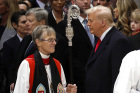
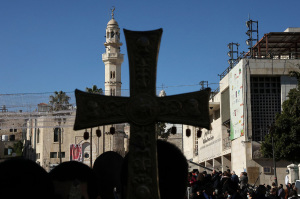
Further, one often-ignored element in this debate is the heightened constitutional protection afforded to churches and religious worship. The First Amendment does not merely tolerate religious exercise; it affirmatively safeguards it. Courts have long recognized houses of worship as uniquely protected spaces where interference implicates not just public-order concerns, but the Free Exercise Clause.
That is why courts have upheld buffer zones, injunctions, and time, place and manner restrictions aimed specifically at preventing disruptions of worship services, sometimes permitting greater regulation there than in traditional public forums. While protest activity enjoys broad protection on sidewalks and in public squares, courts have consistently drawn a firmer line when demonstrations intrude on or disrupt religious services, recognizing the constitutionally protected right of worshippers to gather without intimidation, coercion, or disruption.
If one accepts the argument often made about January 6, 2021, that storming the U.S. Capitol threatens constitutional governance, then one must also acknowledge that storming a church threatens constitutional liberty at its root. Religious worship is not merely an expressive activity among many others. It is a protected constitutional exercise, and interference with it warrants heightened scrutiny, not casual dismissal based on political sympathy.
The most revealing aspect of the public reaction to the Lemon indictment is how little of it engages these legal distinctions at all. Many who downplayed or justified January 6 because they sympathized with the protestors’ cause now insist that any unauthorized entry into a building is an unforgivable crime. Meanwhile, many who described January 6 as an “existential threat to democracy” have minimized or excused the storming of churches and the intimidation of worshippers because they sympathize with the protestors’ cause.
The inconsistency is glaring.
If storming the Capitol is an attack on constitutional order — and I believe that it was — then storming a church is an attack on First Amendment religious liberty — and I believe that it is. Participants in both events should be prosecuted under neutral laws, without selective lawfare, and afforded full due process.
For the press, the question remains narrow and principled: did the journalist act as a journalist, or did he cross the line into participation?
Constitutional principles and protections cannot be switched on and off depending on personal sympathies or political goals. That is the real test of constitutional law. Here, journalists should be protected when they report, observe and criticize — even when their work is unpopular. But they must be held accountable when they knowingly participate in criminal acts.
Anything broader invites authoritarian abuse. Anything looser invites lawlessness.
The Don Lemon indictment is not a loyalty test, just as January 6 was not. These cases test whether we still believe the Constitution applies neutrally, even when it protects people we strongly disagree with, and even when it refuses to shield people we strongly agree with.
That principle is worth defending precisely because equal justice under the law is what separates constitutional government from mob rule.
Jenna Ellis served as the senior legal adviser and personal counsel to the 45th president of the United States. She hosts “Jenna Ellis in the Morning” weekday mornings on American Family Radio, as well as the podcast “On Demand with Jenna Ellis,” providing valuable commentary on the issues of the day from both a biblical and constitutional perspective. She is the author of “The Legal Basis for a Moral Constitution.”