Lutheran group details ongoing work of leading Somali outreach in Minnesota

As the Trump administration is reportedly preparing to deploy 100 U.S. Immigration and Customs Enforcement (ICE) agents to Minnesota, home to an estimated 87,000 people with Somali ties, Lutheran church leaders are pushing back against federal immigration enforcement actions with evangelism.
Last Tuesday, Minneapolis Mayor Jacob Frey said ICE agents are being deployed to the Twin Cities to specifically target the Somali community, which has faced allegations of rampant fraud involving the state’s benefit system after federal prosecutors charged dozens of individuals with stealing over $300 million from the Federal Child Nutrition Program through Feeding Our Future, a Minnesota-based nonprofit.
The state's Democratic Gov. Tim Walz conceded that the total amount stolen through these fraud schemes could be as much as $1 billion. An audit is expected to be released to the public in January 2026.
The alleged fraud schemes drew controversial remarks from President Donald Trump during a Cabinet meeting last week, in which he referred to Rep. Ilhan Omar, D-Minn. — who hails from Somalia and has referred to that country's leader as "my president" — as "garbage" and suggested Somalians "come from Hell."
Trump described Somalia in the Horn of Africa as "barely a country" and accused refugees in the Twin Cities of having "ripped off that state for billions of dollars, every year, and they contribute nothing." The president also threatened to strip temporary legal protections from Somalis living in Minnesota.
In response to the president's remarks, some Christian denominations and organizations, including the left-leaning evangelical Lutheran Church in America (ELCA), condemned what one leader described as Trump's "anti-immigrant rhetoric." Others, including the more conservative Lutheran Heritage Foundation (LHF), encouraged forming relationships and sharing the Gospel with Somali neighbors while those doors are still open.
The LHF, a registered service organization with the Lutheran Church — Missouri Synod (LCMS), is a mission organization dedicated to translating and publishing the foundational books of the Lutheran faith into nearly 190 languages, including Somalian.
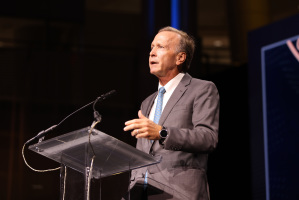
Dinku Bato, LHF regional director for Africa, is part of a group of Lutheran pastors and lay leaders working to figure out how best to share the Gospel with their Somali neighbors in the Twin Cities, home to the world’s largest Somali population outside the country of Somalia.
LHF began translating Martin Luther’s “Small Catechism” into Somali in the early 2000s, and since then, distribution has “taken place cautiously” within Somalia and more widely among Somali communities in neighboring African countries, Europe and North America, Bato said.
While he wouldn't comment specifically on ICE's enforcement actions or Trump’s comments about Somalia, Bato said he believes Lutherans have a duty to receive anyone as a neighbor.
“When immigrants, Somali or otherwise, arrive in our communities, we receive those opportunities with gratitude,” he recently told The Christian Post. “And the beauty of a book is that it travels with the reader. Even if someone must relocate, whether within the U.S. or internationally, that book continues teaching and proclaiming Christ wherever it goes.”
To date, LHF has published seven different books in the Somali language, with more than 100,000 copies printed. While Bato said LHF itself doesn't typically conduct one-on-one evangelism, they often provide books at no cost to missionaries, congregations and individuals at various events, including an LHF conference in July focused on Somali outreach.
Following that event, Bato recommended that evangelists may want to avoid handing out the Bible or other books to Somalis because a “book can be a problem for Somali people when they bring them into their homes.” He even warned attendees against sharing the Gospel “unless it’s an emergency and a person is dying. Instead, relate to them. Pour coffee, invite them to dinner. That is a good thing.”
When asked whether he believes the Gospel presentation is central to Somali outreach, Bato said, “For many Somalis, if you begin a conversation by immediately presenting the Gospel, the discussion ends before it begins. The person may shut down or walk away because of fear, cultural pressure, or past experiences.”
The vast majority of foreign-born Somalis living in Minnesota are not only naturalized U.S. citizens, but also identify as Sunni Muslims. Since 2007, Minnesota has been home to the recruitment of young Somali men by the Islamic State and al-Shabaab terror networks.
Is the Somali outreach done by Bato and others bearing fruit in Minnesota? Bato said there are no reliable statistics on the number of Somali Christians in the U.S., largely in part because of Somali culture.
“The primary reason is that most Somali believers do not worship publicly. Instead, they gather in small, informal home groups due to the social, economic and familial consequences they may face if their Christian faith becomes known,” he said.
Despite keeping a low profile, Bato says there are “a few” Somali Christian fellowships in Minneapolis and the Columbus, Ohio, area, along with scattered “individual believers across the U.S. But when asked if he could provide any specifics on how many Somali Christian fellowships are located in Minnesota, Bato declined.
“These are people I stay in touch with, share resources with, and visit when possible,” he said. “But any broad numerical estimate would be speculative and potentially unsafe.”