Christian persecution has not ended. What has changed is US's response

When The Christian Post published my article, “When Christian worship is a crime: The deadliest era in modern history,” it documented a reality many Christians around the world already know firsthand: worship itself has become dangerous. Believers are being targeted not for political activity or violence, but simply for gathering, praying, and living openly as followers of Christ.
In the weeks since that article ran, the persecution has not slowed. In some regions, it has intensified. What has changed is the posture of the United States.
Christian persecution remains one of the most pervasive and underreported human-rights crises in the modern world. According to the 2026 World Watch List, more than 388 million Christians now face high levels of persecution or discrimination because of their faith. Nearly 4,900 Christians were killed worldwide during the most recent reporting period, a conservative figure reflecting only documented cases where a faith-based motive could be confirmed, in regions where many deaths are never formally reported.
Those numbers confirm what many have long warned: this is not a series of isolated incidents. It is a sustained global pattern often enabled by indifference, weak enforcement, or the absence of consequences.
Violence against Christians continues around the world
Attacks on Christian communities have persisted across multiple regions.
In sub-Saharan Africa, extremist violence continues at a devastating pace. Christian villages have been raided, churches burned, pastors murdered, and worshippers kidnapped. Nigeria remains the single deadliest country in the world for Christians, with perpetrators frequently operating with little fear of accountability.
Beyond Africa, persecution continues largely out of the global spotlight. In Syria and across parts of the Middle East, Christian communities that survived years of war now face renewed pressure, displacement, and intimidation. In Egypt, Christians continue to live under uneven enforcement of legal protections, with periodic attacks and restrictions on worship. In the Democratic Republic of the Congo, Islamist-linked violence has increasingly targeted Christian civilians, contributing to one of the deadliest environments for believers worldwide.
Across South Asia, particularly in India, Christians face a growing combination of legal and social pressure. Anti-conversion laws, mob violence, and selective enforcement have increasingly been used to disrupt worship services, intimidate pastors, and criminalize ordinary expressions of faith.
These developments do not contradict what was documented in January. They confirm it.
U.S. moves from engagement to enforcement
It is important to be precise about the timeline. The Trump administration did not first engage the issue of Christian persecution in 2026. U.S. concern over religious-freedom violations had already been expressed through diplomatic pressure, public condemnation, and international monitoring throughout 2025.
But engagement alone has limits, especially when those responsible for persecution face no personal consequences.
What has shifted since January is not awareness, but enforcement.
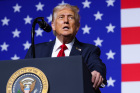
Under President Donald Trump, the United States has begun attaching tangible consequences to participation in religious persecution. Most notably, the administration has implemented visa restrictions targeting individuals, both state and non-state actors, who are responsible for directing, enabling, or carrying out violations of religious freedom.
Announced and enforced by Secretary of State Marco Rubio in December 2025, the policy allows the United States to deny entry to foreign nationals involved in egregious anti-Christian violence, beginning with Nigeria, and framed to apply more broadly to severe religious-freedom violations.
This shift is not symbolic. For political elites, militia leaders, and officials in persecution hotspots, access to the United States represents legitimacy, mobility, and opportunity. When that access is denied, the message is unmistakable: persecution carries cost.
In November 2025, the United States formally designated Nigeria a “Country of Particular Concern” for religious-freedom violations, another significant step underscoring the seriousness of the crisis. In early February 2026, U.S. officials reported additional security cooperation with Nigerian authorities following continued extremist violence.
No single policy ends persecution overnight. But direction matters. Silence emboldens. Consequences deter.
This enforcement-focused posture is consistent with the Trump administration’s broader framing of anti-Christian bias as a serious concern. In February 2025, President Trump signed an executive order establishing a Department of Justice task force to address anti-Christian bias domestically — demonstrating that the administration had elevated the issue well before the visa restrictions announced later that year.
The international measures that followed represent a continuation — and escalation — of that posture, not a sudden pivot.
Distinction between indifference and resolve regarding persecution
The persecution of Christians has not ended. Churches are still attacked. Believers are still imprisoned. Families are still grieving.
The Body of Christ cannot afford to look away while brothers and sisters are targeted simply for worshiping.
But there is a meaningful distinction between indifference and resolve.
Since January, the United States has moved from acknowledging the crisis to attaching consequences to it. That shift deserves to be documented not as a celebration, but as a record. Attention without action changes little. Action, even imperfect action, can alter trajectories.
Worship remains a crime in too many places around the world. But for the first time in a long time, America is attaching consequences, not just condolences.
Wendy Yurgo is the Founder and CEO of Revere Payments, a Christian conservative fintech company serving many of the nation’s leading faith-based and freedom-driven organizations. She is a writer and speaker passionate about faith, freedom, and strengthening families. Her work is rooted in light, guided by principle, and grounded in truth. (Previously published under Wendy Kinney.)