First Amendment doesn’t protect protests that disrupt church services, civil liberties org. says
Quick Summary
- The Foundation for Individual Rights in Education says the First Amendment does not protect protests that disrupt church services.
- Nonpartisan civil liberties group emphasizes that houses of worship are not public forums.
- Three protesters face federal charges under the Freedom of Access to Clinic Entrances Act.

In the aftermath of last Sunday's storming of Cities Church in St. Paul, Minnesota, a nonpartisan civil liberties group says that the First Amendment does not protect protesters who interrupt church services, refuting claims made by political commentator Don Lemon.
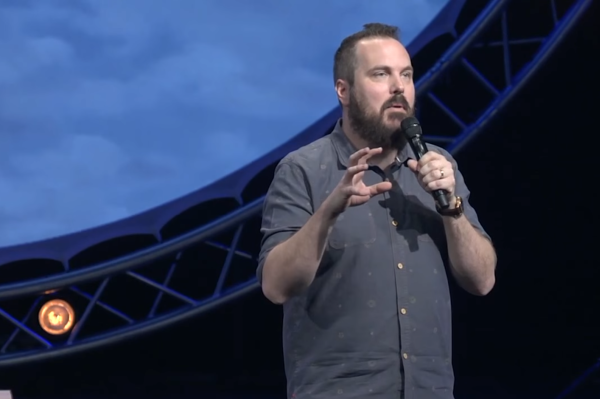
In a post written by one of its board members, the Foundation for Individual Rights in Education, which specializes in First Amendment cases and represents clients from a wide range of backgrounds and political beliefs, stressed that houses of worship are not public forums and that entering a church to disrupt a service is not a protected form of protest.
Board member Samuel J. Abrams clarified that the First Amendment protects speech in traditional public areas such as parks and sidewalks but does not extend those protections to private property where the owners have not consented to expressive activity.
"There is no First Amendment right to enter a house of worship and engage in conduct that effectively shuts down a religious service, even as part of a protest. Nor does anybody have the right to remain on private property after being asked by its owner or authorized representatives to leave," Abrams wrote.
"The First Amendment offers its strongest protection to speech in traditional public forums — streets, sidewalks, and parks — while also protecting freedom of association, religious exercise, and freedom of conscience. A society committed to free expression depends not only on protecting speech, but on maintaining a clear delineation between protected speech, on the one hand, and unprotected civil or criminal conduct on the other."
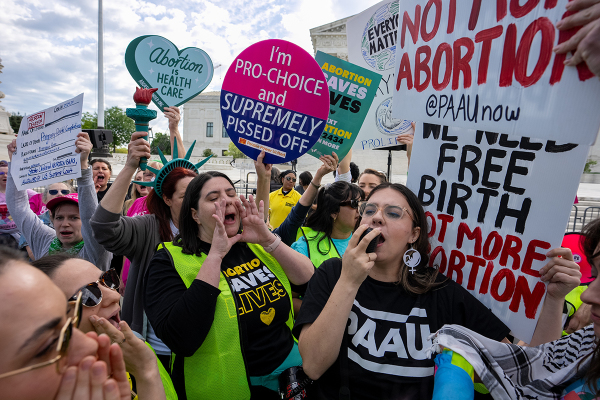
Several demonstrators associated with left-wing groups like Racial Justice Network and Black Lives Matter stormed the worship service of the Southern Baptist congregation on Jan. 18 to demand that one of its pastors step down because he leads a local ICE field office. The Sunday service ended early after demonstrators screamed at churchgoers.
While interviewing Lead Pastor Jonathan Parnell after the interruption, former CNN host Lemon, who has distanced himself from the protesters amid a federal investigation into the incident, tried to argue that what the protesters did in storming the church services was a protected First Amendment right.
Video footage showed Lemon entering the church with the protesters and responding to requests to leave by saying, “This is what the First Amendment is about.”
Three participants in the protest have been arrested and charged by federal prosecutors under the Freedom of Access to Clinic Entrances (FACE) Act of 1994, which prohibits "intentionally injuring, intimidating, or interfering with ... [anyone] seeking to exercise the First Amendment right of religious freedom at a place of religious worship."
U.S. Department of Homeland Security Secretary Kristi Noem posted a photo of protest leader Nekima Levy Armstrong being led away in handcuffs, noting she would be charged under 18 U.S. Code § 241. Known as “Conspiracy against rights,” the law prohibits “two or more persons conspire to injure, oppress, threaten, or intimidate any person ... in the free exercise or enjoyment of any right or privilege secured to him by the Constitution or laws of the United States.”
An appeals court rejected the request from the U.S. Department of Justice to charge Lemon and others for their ties to the protest.
Abrams stressed that private property owners, including religious institutions, retain the legal authority to exclude speech they do not invite, regardless of its political or social urgency. The distinction is rooted in longstanding constitutional law that shields private institutions from being compelled to host speech or conduct that interferes with their purpose. However, confusion over the limits of the First Amendment is growing.
"This distinction matters because the First Amendment is often misunderstood as an affirmative license to protest anywhere," Abrams stressed. "It is not. It protects individuals from government suppression of speech; it does not compel private institutions to host expression they do not invite. Treating the First Amendment as a roaming permission slip for disruption misstates both the law and the logic of free expression."
David French, a constitutional lawyer and a staunch critic of President Donald Trump, commented that such disruptions infringe on congregants' rights and emphasized the need to preserve peaceful worship spaces.
Abrams asserts that allowing such intrusions weakens civil society by undermining voluntary spaces where people assemble for shared purposes apart from government or political conflict. Free expression and religious liberty, he added, are mutually reinforcing but depend on a legal structure that maintains clear lines between public speech rights and private institutional autonomy.