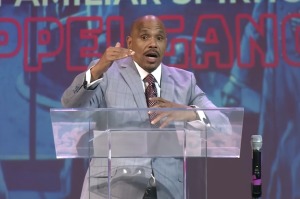
Majority of pastors now using AI to prepare sermons amid rapid embrace of technology: study


Quick Summary
- Nearly two-thirds of pastors who write sermons are now using AI tools in preparation.
- Sixty-one percent of pastors report using AI weekly or daily, up from 43% in 2024.
- Concerns about the ethical implications of AI-generated content are rising among church leaders.

A majority of pastors are now using artificial intelligence to prepare their sermons, with ChatGPT and Grammarly reported as the top two AI tools, new survey data shows.
"ChatGPT is the most visible generative AI tool that can engage in human-like conversations and assist with a wide range of tasks, from answering questions to generating content," researchers wrote in "The 2025 State of AI in the Church Survey Report" prepared by AiForChurchLeaders.com and Exponential AI NEXT.
"As the most popular AI tool among church leaders (26%), ChatGPT is being used for applications such as sermon preparation, research, and crafting church communications. Its versatility and ease of use make it a powerful asset for streamlining ministry work and sparking creative ideas."
The data, based on responses from 594 pastors and church staff members, shows that church leaders are now more concerned about "the weighty ethical and practical considerations involved" in the use of AI as they continue their rapid embrace of the technology.
Nearly two-thirds of church leaders surveyed who prepare sermons say they use AI tools in their sermon writing process, the researchers note.
"This suggests that AI is quickly becoming a key tool for pastors in their weekly message preparation," they wrote.
Some 61% of pastors say they use AI weekly or daily, up from 43% in 2024. In that share, 25% report using AI daily.
"Overall, the survey depicts a church that is increasingly open to the ministry possibilities of artificial intelligence, while still grappling with the weighty ethical and practical considerations involved," researchers state. "Most churches seem to believe that AI can be beneficial if used as a tool, but not a replacement for human connection and spiritual discernment."
Some 11% of church leaders report using the AI-powered writing assistant Grammarly for tasks like "polishing emails, newsletters, blog posts, and other church communications." Another 9% said they use Microsoft Co-Pilot, an AI search engine developed by Microsoft, to conduct research, while 8% report using Google Gemini. Another 8% of the church leaders in the study report using Canva Magic Studio, an AI-driven set of design capabilities within the Canva design platform, to design "social media posts, event flyers, presentation slides, generative AI fill, and other visual design functions."
"While some may view this as a concerning trend, others likely see it as a way to enhance their research, writing efficiency, and creativity," researchers note. "As AI sermon writing tools continue to improve, it will be important for church leaders to find the right balance between leveraging AI's capabilities and maintaining their unique voice and spiritual insights."
About 30% of the leaders involved in the survey represent churches with fewer than 100 members, while about a quarter (24%) represent churches with between 100 and 249 members. Fourteen percent are leaders of churches with 250 to 499 members; 11% have 500 to 999 members; 14% have 1,000 to 4,999 members and 2% of the leaders are at churches with 5,000 to 9,999 members. Another 2% report more than 10,000 members.
"The demographics reveal a broad interest in AI across different leadership roles within the church, with a notable representation from Gen X and Millennials. This diversity suggests a wide acknowledgment of AI's relevance but also indicates the potential for generational divides in technology acceptance and usage," the report notes.
Around half (50%) of the leaders involved in the survey are either lead pastors or executive pastors. The top concerns they had about the use of AI in ministry are now: misinformation and the theological accuracy or alignment of AI-generated content; AI replacing or diminishing personal, spiritual guidance and the quality of human relationships within the church community; privacy and data security; and transparency and accountability.
Still, church leaders are optimistic about the use of AI in ministry and believe that, with the right training, they can overcome hurdles as they arise. Some 87% of pastors said they are willing to invest in AI education and training for themselves and their staff.
"To overcome known hurdles, church leaders will need to prioritize AI education and training for themselves and their staff. This could include attending workshops, partnering with AI experts, and investing in ministry-specific AI resources," researchers said. "Proactively addressing ethical considerations through the development of robust AI policies and frameworks will be critical to building trust and buy-in from congregations. By taking these steps, churches can position themselves to reap the benefits of AI while mitigating potential risks."
A survey released earlier this year by Pushpay, a leading payments and engagement solutions provider for the faith-based and nonprofit sectors, collected in February from about 8,000 church leaders, suggests that the use of AI has increased by 80% across all ministries in churches, but only for specific tasks.
"While adoption (of AI) has increased, leaders remain reluctant to rely on AI for pastoral content. Last year's report revealed that less than one quarter of AI users applied the tool for developing devotionals, sermons, or ideas for pastoral care; that pattern still holds true today," Pushpay researchers noted. "The vast majority of AI use cases revolve around content generation and editing of communication materials like emails, imagery, and social media posts."
Contact: leonardo.blair@christianpost.com Follow Leonardo Blair on Twitter: @leoblair Follow Leonardo Blair on Facebook: LeoBlairChristianPost