Azerbaijan's claim of peace with world's first Christian nation Armenia has holes

In a recent interview with France 24, Azerbaijani President Ilham Aliyev declared that peace between Armenia and Azerbaijan has already been achieved. “For Azerbaijan, the conflict is over,” he stated, emphasizing economic cooperation and regional connectivity as evidence that stability has arrived. He added that “we need peace in the region” and that Azerbaijan seeks “normal relations with all neighbors.”
These statements offer a hopeful vision. But as a faith leader, an advocate for international religious freedom, and CEO of Save Armenia, I believe peace must be measured not by declarations but by reality. True peace is grounded in justice, mutual dignity, and the protection of fundamental rights. It cannot be sustained if core issues remain unresolved or if one side’s narrative defines the process.
I support diplomatic engagement and normalization between Armenia and Azerbaijan because sustainable peace is both necessary and achievable. Yet I am deeply concerned that the current rhetoric risks creating a false sense of closure while leaving the most important questions unanswered. The international community, and especially the United States, must remain focused on whether the conditions for lasting stability truly exist.
Armenia is the world’s first Christian nation, adopting Christianity as a state religion in the early fourth century. For more than seventeen centuries, Armenian identity has been inseparable from faith. Its churches, monasteries, and sacred traditions are not only national treasures but part of the shared heritage of global Christianity. This civilizational and spiritual reality is largely absent from current diplomatic messaging, yet it is central to understanding both the trauma and the resilience of the Armenian people.
One of the most urgent concerns is the continued detention of Armenian prisoners. Despite diplomatic progress, Azerbaijan continues to hold several former Nagorno-Karabakh officials and other detainees. In February 2026, Azerbaijani authorities sentenced former State Minister Ruben Vardanyan to a lengthy prison term on terrorism-related charges. International observers and Armenian advocates have raised serious concerns about due process and political motivation. These detentions undermine trust and raise profound questions about whether reconciliation or leverage is guiding the process.
Lasting peace cannot coexist with political prisoners. From a religious freedom perspective, this issue extends beyond politics. Many of those detained represent a community that has endured displacement, persecution, and the loss of its historic homeland. Their continued imprisonment signals that power, rather than justice, may be shaping the future.
The humanitarian consequences of the 2023 crisis also remain unresolved. Following Azerbaijan’s military operation in Nagorno-Karabakh, more than 100,000 ethnic Armenians fled the region, according to the United Nations. This exodus effectively ended centuries-old Armenian Christian communities in the territory. In my work engaging Armenian families and faith leaders, I have heard firsthand the stories of loss, trauma, and uncertainty. These are not abstract geopolitical developments. They are human tragedies that continue to shape the region.
Churches and monasteries are not merely historical landmarks. They are living expressions of faith, identity, and continuity for a people whose spiritual heritage spans centuries. The preservation of these sacred spaces is a clear test of whether peace will genuinely include respect for religious freedom and cultural heritage. Yet this raises an important question. If protecting religious and cultural sites is a global priority, why has UNESCO not taken a more visible and proactive role in ensuring credible monitoring and accountability?
While statements have been made, transparent and sustained mechanisms remain limited. In the absence of official access, organizations such as Caucasus Heritage Watch, affiliated with Cornell University, have used satellite imagery to identify significant alterations and damage to multiple sites, highlighting the urgent need for independent monitoring and international accountability.
During his France 24 interview, President Aliyev framed Azerbaijan as the primary driver of peace and stability. However, genuine reconciliation requires more than unilateral narratives. It requires humility, mutual recognition, and preparation of societies for coexistence rather than triumph. Peace that is perceived as imposed or one-sided will not endure.
Significant structural issues also remain unresolved. Border demarcation, transportation corridors, and long-term security guarantees remain under negotiation. These are not technical matters. They are foundational to trust and stability. Premature declarations of success risk weakening diplomatic leverage and overlooking warning signs that history has shown can lead to renewed conflict.
In my role leading Save Armenia, I am committed to engaging policymakers, faith leaders, and international partners to ensure that any peace process is not only strategic but moral. The United States has played an important role in facilitating dialogue. That leadership must now focus on measurable outcomes.
First, the United States should prioritize the release of detainees and transparent legal processes. Sustained diplomatic engagement, including the use of targeted tools when necessary, can reinforce the importance of justice and accountability.
Second, religious freedom and minority protections must be embedded in any peace framework. This aligns with longstanding U.S. commitments and the work of the U.S. Commission on International Religious Freedom and the State Department’s Office of International Religious Freedom. Durable stability is closely tied to the protection of conscience and belief.
Third, the international community should support independent monitoring of cultural and religious heritage in the region. Cooperation with UNESCO and other institutions can build transparency and confidence.
Fourth, Congress should continue bipartisan engagement through the Congressional Armenian Caucus and international religious freedom coalitions to ensure sustained oversight and strategic focus.
Finally, long-term peace requires sustained investment in civil society and people-to-people engagement that strengthens Armenia’s historic Christian identity and resilience as the world’s first Christian nation. Agreements between governments are only the beginning. Trust must be rebuilt through renewed confidence, cultural continuity, and the preservation of faith and heritage that have sustained the Armenian people for centuries.
President Aliyev’s interview offers insight into how Azerbaijan seeks to frame the current moment. But the world must look beyond rhetoric and remain attentive to the deeper realities shaping the region.
I believe that true peace in the South Caucasus must be rooted in justice, dignity, and the protection of faith and identity. Peace that ignores the suffering and fears of vulnerable communities will not endure. Peace grounded in religious freedom, human dignity, and mutual respect, however, can create the foundation for reconciliation and long-term stability.
The stakes are not only regional. They are moral and global. And justice, if it is to be real, requires vigilance.
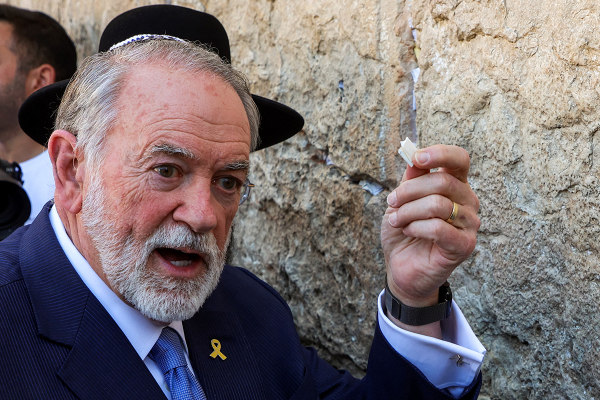
Dr. Paul Murray is CEO of Save Armenia and a Christian leader engaged in global religious freedom and policy advocacy.