What is going on in Iran? Ex-Muslim, counterterrorism expert explains

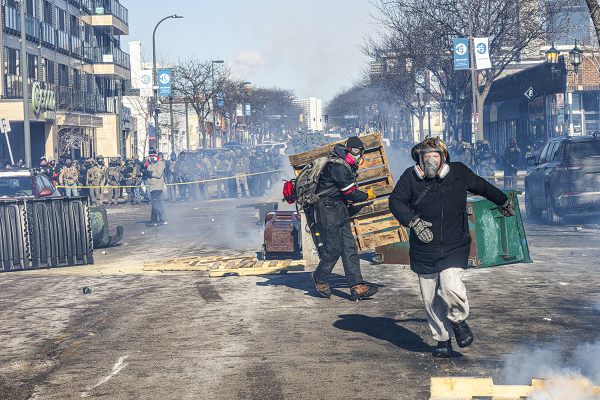
What is unfolding in Iran is not merely a political crisis or a regional disturbance. It is the possible collapse of a ruling ideology that has governed through fear, violence, and religious coercion for more than four decades.
The consequences of such a collapse would extend far beyond Iran’s borders, affecting global energy markets, regional security, and the future credibility of political Islam itself.
For years, Western governments have treated the Islamic Republic as a permanent fixture, something to be managed rather than fundamentally challenged. That assumption is now breaking down. Inside Iran, the voices rising from the streets tell a story that cannot be dismissed as foreign agitation or isolated unrest. Millions are openly rejecting Islamic rule and calling for a return to a national identity that predates clerical domination. This is not a reform movement seeking cosmetic change. It is a people-led rejection of theocratic control.
In that rejection, many Iranians are not looking toward an untested experiment but toward restoration. Across protests and underground networks, calls for the return of Crown Prince Reza Pahlavi reflect a desire for continuity, national dignity, and a future untethered from clerical domination. For supporters, a constitutional monarchy is not about reviving the past but about reclaiming a unifying national identity that predates the Islamic Republic and allows space for political pluralism, religious freedom, and the rule of law. In a country fractured by decades of ideological control, the Shah’s return is viewed by many not as authoritarianism reborn, but as a bridge toward stability and self-determination.
Outside Iran, however, the situation becomes far more complicated. Power vacuums attract competitors, and Iran’s opposition landscape is crowded with factions eager to position themselves as the rightful alternative. Some of these groups enjoy backing from influential Western political figures despite holding ideologies that are deeply incompatible with genuine freedom. One of the most prominent is the Mujahideen-e Khalq, commonly known as the MEK. Though often marketed in Western capitals as a democratic opposition, the MEK functions as a rigid ideological movement rooted in a blend of Marxism and Islamist discipline, demanding absolute obedience from its members and tolerating no internal dissent. This vision bears little resemblance to the aspirations of a generation of Iranians risking their lives for personal liberty, open faith, and national restoration. A people crying out for freedom are not seeking to exchange one authoritarian system for another under a different banner.
The international stakes surrounding Iran’s instability are enormous. The country sits at the crossroads of global energy supply, proxy warfare, and nuclear brinkmanship. A destabilized regime could send oil prices downward, disrupt militant networks funded and armed by Tehran, and overturn decades of diplomatic assumptions. These realities help explain why many governments respond with hesitation rather than resolve. Too often, the fear of instability outweighs concern for justice, as though prolonged oppression were somehow the safer option.
For decades, Western policy has quietly sustained Islamist regimes in the name of balance and pragmatism. Saudi Arabia, Qatar, Turkey, and other states have been treated as indispensable partners despite their own suppression of dissent and religious freedom. The possible fall of Iran’s clerical system would represent something unprecedented: the rejection of Islamic governance by its own people. Such a development threatens not only regional power structures but also the ideological legitimacy of political Islam across the broader Muslim world.
These concerns dominate private diplomatic conversations. Regional leaders warn of economic disruption and ideological contagion. Western officials caution against unintended consequences and regional chaos. Meanwhile, ordinary Iranians face violence, surveillance, imprisonment, and economic suffocation with extraordinary courage. The moral contrast could not be clearer. Stability is being elevated above truth, and caution is being treated as a virtue even when it enables injustice.
Military action dominates public debate, yet it is far from the only tool available. Less visible measures remain significantly underused. Enforcement against regime elites and terror networks is inconsistent. The Islamic Revolutionary Guard Corps continues to operate through front companies, shipping firms, construction conglomerates, charities, banks, and energy intermediaries. Assets are hidden through relatives and proxies. Money is routed through third countries. Travel occurs under diplomatic cover. Sanctions exist, yet enforcement remains selective and hesitant.
A serious commitment to accountability would require more than statements. It would mean cutting access to global banking, insurance, aviation, and shipping systems. It would involve freezing assets not only of uniformed commanders but also of family members and facilitators who profit from repression. It would require shutting down humanitarian and commercial channels that function as regime slush funds rather than genuine relief efforts. These actions fall short of open war while directly weakening the machinery that sustains tyranny.
Cyber operations and information warfare also play a crucial role. The Iranian regime relies on controlling communication, suppressing truth, and isolating citizens from one another. When these systems are disrupted, even briefly, the illusion of total control collapses. Citizens discover they are not alone, and fear gives way to defiance. Authoritarian power depends as much on psychological dominance as physical force.
Israel watches these developments with understandable intensity. A free Iran would dramatically weaken the ideological engine behind much of the region’s anti-Israel militancy. It would alter security calculations, peace negotiations, and long-standing assumptions about what is possible in the Middle East. The implications extend well beyond territorial disputes and diplomatic accords.
Recent events underscore how fragile the regime’s position has become. Foreign diplomats are withdrawing. Evacuation orders have been issued for Western citizens. Intelligence reports suggest that regime insiders are quietly moving wealth and preparing exit strategies. These are not the actions of a confident government. They are signs of a system bracing for collapse.
For Christians, this moment carries a spiritual weight that cannot be ignored. Iran’s government criminalizes conversion, imprisons pastors, and labels evangelism a national security threat. Faith in Christ is treated as treason. Yet despite relentless persecution, Christianity is growing through underground churches at a remarkable pace. The spread of the Gospel in Iran stands as a living rebuke to the claim that coercive religion can suppress truth.
Scripture does not permit moral detachment in moments like this. God calls His people to seek justice and defend the oppressed. He also reminds us that earthly powers are temporary. What is built on fear and falsehood will eventually be shaken, while what is rooted in truth will endure.
Living fearlessly does not require certainty about political outcomes. It requires moral clarity. It means refusing to sanitize evil, refusing to confuse oppression with stability, and refusing to look away when an entire nation cries out for freedom. Millions of Iranian Christians are praying for deliverance even now. The question before the Western Church is whether it will stand with them in prayer, speak truthfully about what is happening, and resist the temptation to let fear or convenience dictate silence.
Hedieh Mirahmadi was a devout Muslim for two decades working in the field of national security before she experienced the redemptive power of Jesus Christ. She dedicates herself full-time to Resurrect Ministry, an online resource that harnesses the power of the Internet to make salvation through Christ available to people of all nations, and her podcast LivingFearlessDevotional.com. She is the author of the International Bestselling book"Living Fearless in Christ-Why I left Islam to Win Battles for the Kingdom."