Adam Hamilton wins US Senate race in Kansas: 'Let's love our neighbors as we love ourselves'

Updated at 12 a.m. ET on Nov. 4, 2026
United Methodist megachurch pastor Adam Hamilton has won Kansas’ U.S. Senate race, unseating Republican Sen. Roger Marshall and calling on supporters to follow the biblical mandate to "love our neighbors as we love ourselves."
Hamilton was projected the winner of the U.S. Senate election around 11:20 p.m. Eastern Time on Tuesday, with 89.4% of votes counted and Hamilton winning 52.1% of the vote, while Marshall received 44.9%.
The Kansas pastor's win is part of a broader "blue wave" of Democratic victories at the state and federal levels, which some view as a rejection of the Trump administration's policies.
Kansas last elected a Democrat senator in 1932, when George McGill of Wichita won reelection after winning a special election in 1930. McGill lost to Republican Clyde Reed, a former governor, in 1938.
In his victory speech Tuesday night, Hamilton noted the historic nature of his win, seeing it as proof that Kansans, regardless of political party, do not like what is happening in Washington.
"We are better together than we are divided," Hamilton told his supporters, saying that 30 percent to 40 percent of his rally attendees were Republican. “Kansans want Republicans and Democrats to work together to actually solve problems, to meet in the middle."
Hamilton also quoted the Bible in his speech, including Matthew 7:12 ("do to others what you would have them do to you") and Micah 6:8 ("what does the Lord require of you? To act justly and to love mercy and to walk humbly with your God").
He also spoke about the parable of the Good Samaritan, declaring, "let's love our neighbors as ourselves" and urged supporters to "love boldly, serve joyfully and lead courageously."
A theological progressive and founding pastor of the United Methodist Church of the Resurrection in Leawood, Kansas, Hamilton has written over 30 books and had served on an advisory council on faith-based and neighborhood partnerships during the Obama administration.
In February, Hamilton announced that he was launching an exploratory committee and a listening tour to discern a possible Senate campaign as an independent candidate.
At a press conference at Harmon Park in Prairie Village in April, Hamilton announced he would run for the Senate as a Democrat “dedicated to leading from the center.”
In May, the Hamilton campaign released his positions on a few hot-button issues, identifying him as pro-choice on abortion, anti-tariffs, supporting a federal minimum wage increase and either term limits or age limits for public elected office.
After securing the Democratic nomination, Hamilton held a “Leading From the Middle” statewide tour to win support from Kansan voters across political and religious lines.
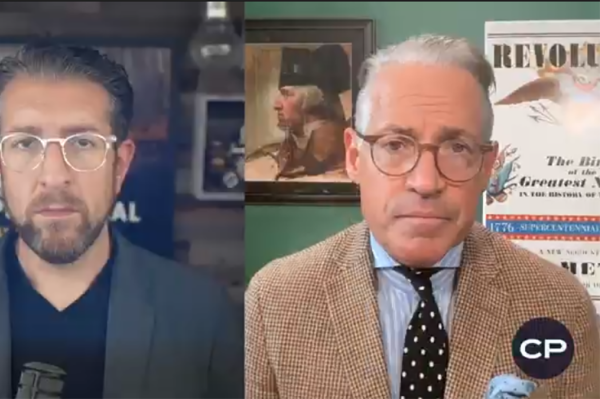
In August, Hamilton told The Christian Post that he was reaching out to conservative Evangelical voters and that, according to him, many had already pledged their support.
Hamilton said Evangelicals in Kansas were “absolutely” part of his outreach and that he had been “already hearing from many of them” that “we’re supporting you.”
“Part of the reason why they are” expressing their support, said Hamilton, was because “when we talk about our values,” they talk “about things that are common for all humans, but certainly for people of faith.”
“So we talk about what’s missing right now is ‘loving your neighbor as you love yourself,’” Hamilton told CP, saying one rural Kansan he spoke to said he “won’t vote for anybody who doesn’t believe we should love our neighbors as we love ourselves.”
Last month, during a debate with Marshall, Hamilton said that he believes "there are two genders, male and female" and that he opposes men being in girls’ sports.
"I have a 12-year-old granddaughter," Hamilton responded to a question about the issue. "I don't want biological men or boys competing against her that could harm her. That's not a fair fight."
The race between Marshall and Hamilton reportedly was the most expensive in state history, with approximately $84.5 million in ad spending, according to National Public Radio. This beat the previous record of $49.1 million, which happened in Marshall's Senate race in 2020.