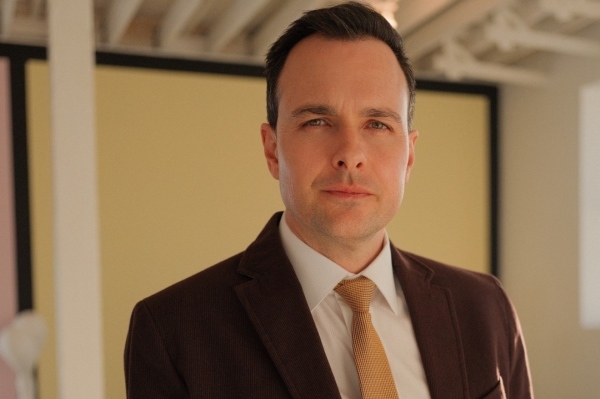
Interview with Alec Hill, President of InterVarsity
InterVarsity Christian Fellowship/USA is a nondenominational ministry that targets the university, reaching 565 campuses, 33,000 students, and 1,200+ faculty with 1,250 staff.
This year, InterVarsity has announced its relocation of the Urbana Missions Conference - the "premier student missions conference in the world," according to President of InterVarsity, Alec Hill - to St. Louis, Missouri because of the ministry's growth.
"We've simply out-grown the wine skin and have been bursting at the seams at the university," Hill said.
The Christian Post interviewed Hill about InterVarsity's recent developments and challenges.
How would you characterize the spiritual state of today's college level student? What are the students looking for?
I think undergraduates are spiritual, but they're not Biblically literate, even those who have been brought up in Christian homes. Positively, there is a high sense of community and worship, but negatively, there is the danger that they relativize the truth and a sense that you can do a smorgasbord of things.
This is also a very tolerant generation, so if you're talking about loving people, healing brokenness, they understand that perfectly, but on the other hand, if you talk about truth and absolutes, it's harder for them. So our job is to contextualize the absolute truth with this generation so that they understand it.
They're idealists. They want to change the world. They seem less guarded than the Xers. They seem bolder. They like challenges. There’s self-confidence to the millennials that's really interesting. They have a lot of accomplishments and are willing to please their parents, but there's a lack of spiritual direction that could act as the compass driving you towards a certain direction with great passion.
How is InterVarsity filling that hunger?
We have a lot more small groups than we used to have. Large groups used to be the dominant thing. Now, small groups are the building block. This is because students place a higher importance on acceptance. They need to get hooked into relationships before belief, which is different from my generation. It was more about following propositional truths. You argue and debate, and then decide if you will join the group. Here, often students need a safe place where they can come and explore that space with people they're comfortable with, and that's the best way to bring them in.
What areas of the campus would you say InterVarsity is growing the fastest today?
The leadership has been talking a lot about that. Historically, campuses have targeted undergraduate residential four-year colleges, and that continues to be a mainstay of InterVarsity, but some of our fastest growing areas are in graduate and faculty, commuter campuses, and even the hardest of all, community colleges. About 15% of the studnets we reach are graduate students.
It has been an area that fits our ethos. InterVarsity historically comes out of Oxford, Cambridge in England in the 1920s, and then came to the U.S. so it's really a British product. As a result, there's always been this calling to reach the university, not just students. We don't just fish for the fish in the pond; we love the pond itself.
So with the university, we view ourselves as insiders. We have really broad goals to influence the academy with 1,200 faculty that we're working with on a regular basis and the new Emerging Scholars Network taps even the undergraduates who want to become professors. The network provides them with mentors and Christian peers so that we can influence these up and coming scholars with a Christian worldview.
In general, it’s not about just reaching the students and faculty, but about changing the university. InterVarsity really loves the university.
Why do you think outreaches to faculty and graduate students are growing so much faster now?
We have a new director, and I think he's given a lot of energy to it.
The graduate students unit became a discreet unit two years ago, and so the numbers have really been increasing. Also, I think there is a hunger among graduate students for fellowship linkages. They want to link with each other. They want to know where other believers are.
And of course, reaching graduate students is a great way to impact the world with the gospel. If only 25% of Americans graduate from undergraduate colleges, and only 3% go to graduate school, these students are really the future leaders of government and media, and we have the privilege of working with them.
What are some of the challenges this vast organization faces?
One of the hot buttons right now is access to campus. At several campuses, we are recognized as student groups. That implies access to meeting rooms, posting notices, and email accounts.
At Rutgers - this is over a year ago now - we were removed as a recognized student club because we insisted that our student leaders be Christian. They said, that's discriminatory. We said we're a religious organization. InterVarsity Fellowship is going to have non-Christian leaders? It's like the young Republicans having Democrats as leaders, but we were given favorable coverage by the press. It was settled out of court, but this issue continues to raise its head in various places.
Because tolerance is the gospel of the university and because Christians believe in an absolute truth, conflict is inevitable. So I think that one big challenge for us and for the other ministries is not being treated as second-class clubs or student groups on campus.
Another challenge is funding. Our staff raises their own support and with healthcare and other costs going up… it has become a greater issue. We're still growing, but for a 24-year-old to go out and raise support, that's a challenge.
What other areas has InterVarsity been targeting, or has seen some changes and growth?
Currently over 35% of our students are ethnic minorities. InterVarsity really had a multiethnic thrust for some time. With multiethnicity comes a lot of joy. A lot of groups move on a homogeneous principle, and we're much more inclusive than that.
Also, we've been quite active in terms of women in leadership for years. There are a lot of women in key leadership positions.
On what principle does InterVarsity operate?
At the University of Nevada Rio, a bunch of juniors and seniors decided to move back into freshman dorms to be missionaries. They paired up and did bible studies, and at the end of the year, 15 students had become believers entirely through this student ministry. I think so often, we think of evangelism as being staff to student, but I would say the large part of our evangelism comes from student to student ministering.
A few years ago, we started something called GIG, Groups Investigating God. They're simply investigative Bible studies, where the rule is at least 50% of attendants are non-believers. The whole idea of inviting non-Christian friends into a study of the Bible has really taken root, and we've seen a lot of students come to deep faith as a result of that.
However, we still conduct proclamation events. At the University of Northern Illinois, students organized an event with an evangelist who survived the 9/11 attack on the Twin Towers. Over 600 people came, and there were 107 faith commitments. That's a large event.
So we're trying to do both the friendship evangelism and proclamation events. Overall, we've had three years in a row of increase in the number of decisions, and we're very encouraged.
What other projects have InterVarsity developed recently?
One of our fastest growing outreach is to Greeks, meaning fraternities and sororities. We see a real need in this student group for the gospel. In the past, we tried to encourage them to come to the regular chapters on campuses, but they already have their community, so InterVarsity developed this niche ministry for Greeks that goes into their houses. We have staff that work exclusively with Greeks. We're very excited about this. Though these are students may lead non-Christian lives and the lifestyle of the Greek is not entirely healthy, they also tend to turn out to be strong leaders.
Another project was our recently held Jesus and Justice conference, where students spend time with the homeless in the streets and listen to the gospel. The idea was to draw a high percentage of non-Christians, mainly social activists and show them that the concepts of justice and peace they believe in are Christian. Campuses have a strong social activist crowd, but the gospel doesn't get to them as much as we'd like. I think the conference created a wonderfully open dialogue with these students who are open, passionate, visionary and committed. A lot of them have negative views of Christianity in general, and Christian history in particular, in terms of social justice, so this conference is a prototype that may go on to develop in many places, and reach out to the social activists.
InterVarsity is a distributed organization, meaning a lot of authority and power is given to the local level. So we get a lot of experimentation. Local campus staffs have a lot of discretion in what they want to do. What's wonderful about that is that creative ideas like the Jesus and Justice conference and reaching niche groups can occur. We hold these divergent ministries with joy, recognizing that we must be broad enough, diversified enough, and interested enough to develop these groups of world changers, students who take the gospel and go out.
Also, InterVarsity strives to bring a holistic approach to understanding the gospel. Last Spring, we had several fraternity brothers go down to do Habitat for Humanity building project in Georgia. Of course the students were mostly Caucasian, and they were working in a multiethnic environment.
However, they served as chaplains for the other student groups that were working. So they worked in the day and did Bible studies at night. Six of the students were non-Christians, but at the end of the trip, one of the six became a believer. In addition to that, the Bible studies that the students led with other groups produced really wonderful conversations, and it also exposed these students to the South, the confederate flag, and to a whole different perspective on life. So I think that it's not just proclamation, but InterVarsity strives to give a holistic approach.
Where do you see the greatest growth happening globally, and what do you think the impact has been?
InterVarsity is part of a worldwide federation, rather than being hierarchical, and so it’s indigenous to every country. In terms of growth, clearly Africa continues to be an amazing place for student ministry with Nigeria being the largest student movement in the world. The student movement in India is also doing well. There are also some countries in the Middle East doing well. The Mongolia mission has been growing fabulously. Missionaries there from Korea and the U.S. have divided into two teams and are now recruiting new staff.
To show impact, Ukraine has a fabulous story. In the late 1980s, a number of young U.S. and Canadian students went to Kiev to do Bible studies with Ukrainian English students, and several became believers. Out of that movement came 25 Ukrainian InterVarsity staff, serving all over the country. During the political upheaval last fall with the fraudulent election, the staff mingled in with the crowds on the street and set up a prayer tent. The lawyer, who argued that the election was a fraud in front of the Ukrainian Supreme Court, happened to be a graduate of the student movement there, and he was coached and prayed for by a staff member the night before he went in. When I think of the influence of those 20-year-olds only 15 years later, which is not that long, it’s inspiring.
Alec D. Hill became President and Chief Executive Officer of InterVarsity Christian Fellowship/USA in July of 2001. Hill holds a B.A. in History and an M.A. in Biblical Studies from Seattle Pacific University. In addition, he earned a J.D. from the University of Washington School of Law. From 1995 - 2001, Hill served as Dean of the School of Business and Economics at Seattle Pacific University.
For the prior decade, he was a Professor of Law and Ethics at the university, publishing numerous articles, consulted with World Vision on homelessness and Amerasian children, developed MBA curricula in Russia, authored “Just Business: Christian Ethics in the Marketplace” (also published in the U.K. and Hong Kong) and presented business ethics seminars in Hanoi, Singapore, Kuala Lumpur, Manila and Hong Kong. In the early 1980s, he served as a Regional Director with World Relief. He and his wife, Mary, and two daughters, Laura and Carolyn, live in Madison, Wisconsin.