Most Americans approve of Supreme Court decisions on parental rights, religious liberty
Quick Summary
- Most Americans approve of Supreme Court decisions on parental rights and religious liberty.
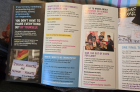
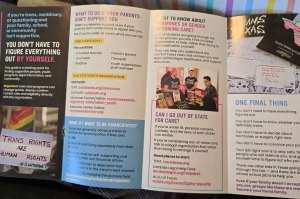
- Sixty-two percent support the ruling allowing parents to opt their children out of LGBT-related curriculum.
- Religious freedom index reaches a record high, reflecting growing public support.

A new report reveals that most Americans support a recent U.S. Supreme Court decision allowing parents to opt their children out of LGBT-related curriculum — especially those who have religious objections to such content — as the nation sees support for religious freedom reaching a record high.
Coinciding with International Religious Freedom Day, Becket released its 2025 Religious Freedom Index last Friday, which details Americans’ views on a variety of topics related to religious liberty.
Based on responses collected from 1,002 adults in the fall of 2025 by Heart+Mind Strategies, the report reveals Americans' thoughts on the Supreme Court’s ruling in Mahmoud v. Taylor, which determined that a Maryland public school violated the religious freedom of parents by prohibiting them from opting their children out of LGBT-related lessons that violated their religious beliefs. Sixty-two percent of respondents told pollsters they supported the ruling.
Mahmoud v. Taylor was not the only Supreme Court decision resulting in favorable outcomes for the cause of religious liberty that received majority support from the American public. Sixty-five percent of respondents expressed support for the court’s decision in Catholic Charities Bureau v. Wisconsin, which overturned a lower court ruling that found the state’s Catholic Charities Bureau’s work providing services to the needy did not qualify as religious activity for the purposes of state unemployment law.
On the other hand, the public was evenly divided about the Supreme Court’s ruling in Oklahoma Statewide Charter School Board v. Drummond. The justices left in place a lower court ruling banning a Catholic charter school from Oklahoma’s charter school program. Fifty-one percent of Americans opposed the decision while 49% supported it.
Respondents were also asked to weigh in on pending Supreme Court cases. In Chiles v. Salazar, which involves a legal battle between the state of Colorado and a Christian counselor who helps children struggling with gender dysphoria become comfortable with their sex. Forty-seven percent think the court should back the counselor, while 29% want the justices to side with the state.
An overall religious freedom index was calculated based on Americans’ responses to questions asking them for their views about religious pluralism, religion and policy, religion sharing, religion and society, church and state and religion in action. The scores for each dimension, on a scale from 0 to 100, were averaged together to create the overall religious freedom index. A higher score indicates a higher level of support for principles of religious freedom, while a lower score indicates a lower level of support.
The overall religious freedom index for 2025 was 71, marking a record high since Becket began conducting the survey in 2019.
Three of the dimensions included in the index also reached record high scores this year: Religious sharing (75), religion and policy (69), and church and state (60). Religious pluralism reached a record high score of 86 for the second year in a row.
Conversely, religion in action saw its score drop from a record high of 70 to 69 this year, while religion and society decreased from 67 to 65.
“As we celebrate National Religious Freedom Day, it’s encouraging to see that a growing number of Americans reject the idea that faith belongs behind closed doors,” said Becket CEO and President Mark Rienzi in a statement accompanying the report’s release. “The Founders recognized that our nation is stronger when we allow our neighbors to bring their beliefs into the public square without fear, even when those beliefs cut against the grain.”
Rienzi added: “Year after year, the index has made clear that religious liberty remains one of our most cherished values. Even amid deep divisions, our nation still believes that our first freedom belongs at the heart of our culture; not as a source of conflict, but as a foundation for overcoming it. The work before us is to see that freedom protected for our children and theirs in the years to come.”
Ryan Foley is a reporter for The Christian Post. He can be reached at: ryan.foley@christianpost.com