

Trump says US is 'going to run' Venezuela in wake of Maduro capture

President Donald Trump said during a Saturday morning press conference at Mar-a-Lago that the United States is "going to run" Venezuela in the wake of taking former Venezuelan dictator Nicolás Maduro into custody during an early-morning raid.
In what Trump called "one of the most stunning, effective days of American military might and competence in American history," the U.S. conducted a large-scale military strike in Caracas, resulting in the capture of Maduro and his wife, Cilia Flores, who are slated to face trial in New York on charges of drug trafficking and narco-terrorism conspiracies.
In an operation he likened to precision military actions that killed ISIS leader Abu Bakr al-Baghdadi in 2019, Iranian military officer Qasem Soleimani in 2020 and neutralized the Iranian nuclear program last summer, Trump praised the success of the raid, noting that "not a single American service member was killed, and not a single piece of American equipment was lost."
"I want to thank the men and women of our military who achieved such an extraordinary success overnight with breathtaking power, precision and competence; you rarely see anything like it," Trump said.
Claiming the U.S. has "knocked out 97 percent of the drugs coming in [to the U.S.] by sea," the majority of which he said carry drugs from Venezuela, Trump said, "We're going to run the country until such time as we can do a safe, proper and judicious transition."
"We don't want to be involved with having somebody else get in, and we have the same situation that we had for the last long period of years. So we are going to run the country until such time as we can do a safe, proper and judicious transition; it has to be judicious, because that's what we're all about," he said.

Trump said the U.S. is "going to stay until such time as — we're going to run it essentially — until such time as a proper transition can take place."
The president also said "very large United States oil companies" will "spend billions of dollars, fix the badly broken infrastructure, the oil infrastructure, and start making money for the country."
Asked later which figures will be running Venezuela "for a period of time," Trump said "the people that are standing right behind me," in an apparent reference to U.S. officials such as Secretary of War Pete Hegseth, Secretary of State Marco Rubio and U.S. Chairman of the Joint Chiefs of Staff Gen. Dan Caine.
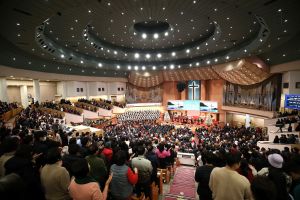
Venezuelan Evangelicals respond to US capture of Maduro
Hegseth praised those who executed what he described as "a massive joint military and law enforcement raid" that was "flawlessly executed" and should serve as a warning to other adversaries of the U.S.
"Nicolás Maduro had his chance, just like Iran had their chance until they didn't, and until he didn't," Hegseth said. "He effed around and he found out."
Hegseth went on to warn that Trump "is deadly serious about stopping the flow of gangs and violence to our country, deadly serious about stopping the flow of drugs and poison to our people, deadly serious about getting back the oil that was stolen from us, and deadly serious about re-establishing American deterrence and dominance in the Western Hemisphere."
"This is about the safety, security, freedom and prosperity of the American people," he added, warning that other adversaries should "remain on notice" that "America can project our will anywhere, anytime."
"What all of us witnessed last night was sheer guts and grit, gallantry and glory of the American warrior," Hegseth said.
Caine described the operation — dubbed "Operation Absolute Resolve" — as "discreet, precise and conducted during the darkest hours of January 2," noting it took months to plan and rehearse.
Secretary of State Marco Rubio described Maduro as an illegitimate president and "fugitive of American justice with a $50 million award" that both he and Trump noted will now not have to be paid.
"I want to be clear about one thing: Nicolás Maduro had multiple opportunities to avoid this," Rubio said. "He was provided multiple very, very, very generous offers, and chose instead to act like a wild man; chose instead to play around, and the result is what we saw tonight."
Rubio suggested such decisive U.S. action should serve as a warning to other nations, some of which have condemned the recent U.S. action against Maduro.
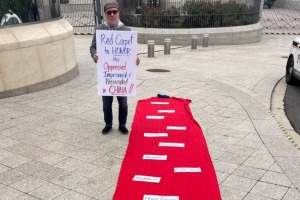
China, whose diplomatic officials met with Maduro shortly before the U.S. military strike, condemned the recent military action as "hegemonic acts" that "seriously violate international law and Venezuela's sovereignty, and threaten peace and security in Latin America and the Caribbean region."
"I hope what people now understand is we have a president — the 47th president of the United States is not a game player," Rubio said. "When he tells you that he's going to do something, when he tells you he's going to address a problem, he means it. He actions it."
Trump did not provide an explicit timetable for how long the U.S. will be running Venezuela, saying he'd "like to do it quickly, but it takes a period of time."
Trump also mentioned the 1823 Monroe Doctrine, named for former President James Monroe, which has been used since the 19th century to assert U.S. dominance in the Western Hemisphere.
Dubbing his version "the Don-Roe Doctrine," Trump said, "American dominance in the Western Hemisphere will never be questioned again."