Mike Winger calls Bethel apology ‘amazing’ but warns Charismatic Church faces defining test

Quick Summary
- Mike Winger calls Bethel Church's recent apology 'amazing' and a significant moment for accountability.
- Winger warns that unresolved issues regarding leadership transparency and prophetic culture remain.
- He emphasizes the need for concrete reforms to ensure integrity and protect victims within the Charismatic Church.

Christian apologist Mike Winger said a recent apology from Bethel Church represents a rare and significant moment of accountability within the Charismatic movement while cautioning that unresolved concerns surrounding prophetic culture and leadership transparency remain.
In a three-and-a-half-hour livestream titled “Bethel and Patricia King responded to my video on Shawn Bolz and Cover-up Culture,” Winger responded to public statements from Bethel leaders, including Bill Johnson, and fellow charismatic figures following his earlier exposé on prophetic minister Shawn Bolz, whom Winger accused of long-term deception and sexual misconduct, as well as a broader pattern of institutional silence.
“This is not some kind of victory lap,” Winger said at the outset of the video. “These are very real issues, very serious issues for the Body of Christ and the well-being and health of the Charismatic Church. And this affects other churches as well. I'm not the one who dictates what happens next, but I would like to contribute and talk about some of the issues that are going on.
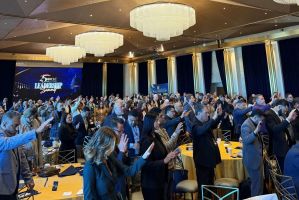
Winger first praised Bethel’s public repentance, delivered from the pulpit by senior leaders, as unprecedented. He applauded the church leadership for acknowledging they failed to act decisively after becoming aware of misconduct allegations against Bolz and failed to adequately warn the church and broader ministry network.
“Bethel actually apologized in a way that is — I’m gonna be straightforward — was amazing, and that sent a signal out that has affected other leaders all over the place,” he said. “That never happens."
“That doesn’t mean that those victims feel closure,” Winger added. “But it does cause them to feel vindicated.”
Still, he stressed that repentance must be followed by concrete reform. Winger said he sees the moment as a broader reckoning, not only for Bethel but for Charismatic leadership as a whole.
“We cannot just be like, ‘Oh good, problem solved,’” he said. “... I don't want to punish the positive things that Bethel did, because I have remaining concerns that absolutely should be in place, and I want to encourage us to keep those in place."
“Right now, Bethel is under the test, and the Charismatic Church is under the test,” he said. “What are you going to do now to demonstrate that you care about integrity, that you care about accountability, that you care about protecting victims?”
He emphasized that the controversy escalated only after public exposure, arguing that private handling had repeatedly failed.
“Recent events have proven that unless it was done in public, nothing would have happened,” Winger said. “The ball would not have moved at all.”
Winger reserved sharp criticism for what he described as a theological and organizational framework that discourages public accountability, particularly teachings popularized within Bethel’s sphere.
“I do believe Danny Silk, whether he intended to or not, is one of the architects of this culture,” Winger said, referring to the Bethel-affiliated teacher. “That results in cover-up culture.”
The emphasis on protecting leaders’ reputations, he reiterated, has repeatedly come at the expense of victims.
“Cover-up culture is elitism,” Winger said. “Why is it that so much effort and energy is spent protecting the reputations of leaders but not protecting the actual safety of the people in the congregation?”
Responding to claims that public exposure damages the church’s witness, Winger cited biblical precedent for public rebuke of leaders who persist in sin.
“There’s times in Scripture where public rebuke comes, and it can be a very good thing,” he said. “Jesus went around publicly rebuking. There are times where it is, in fact, appropriate. ... The prophets’ ministries were all public rebukes.”
He added, “When Christians call out their own, even if the world sees it, they see us calling it out ourselves.”
Winger also addressed responses from other Charismatic leaders, including Patricia King, whom he accused of minimizing ties to Bolz and reinforcing patterns of deflection rather than accountability.
“Some of the responses are just cover-up culture,” Winger said, singling out statements that, in his view, downplayed institutional responsibility.
Despite his criticisms, Winger credited Bethel congregants, alumni and younger leaders for forcing the issue. He described the apology as a turning point driven from within rather than imposed from outside.
“It wasn’t my video that made Bethel change,” he said. “It was people at Bethel. It was alumni from Bethel. It was someone in the pew. ... It was alumni from Bethel reaching out … a person in the pew who's been giving and donating to that ministry for years, who's been there for 10 years, who said, ‘No, this is not OK, guys, we have to do something now.’ They're the ones that made Bethel change. It was someone on staff, I'm theorizing here, who said, ‘No, it's not OK.’”
“That’s why it has to be public,” Winger said. “The Charismatics can fix the Charismatic Church.”
While Winger described Bethel’s public repentance as “amazing,” he said unresolved questions about leadership awareness, institutional responsibility and the handling of earlier warnings prevent the moment from being considered closure.
Among the reforms Bethel leaders outlined were the launch of a “Safe Church” reporting process administered by a third-party organization, expanded prophetic training, and a commitment to broader senior leadership oversight.
“I don’t think this is all damage control,” Winger said. “I think it’s a first step that could be the open door to something really wonderful.”
Still, he questioned whether the third-party reporting structure has the authority to compel transparency if allegations involve senior leaders.
“If an overwhelming number of reports came in about somebody in a major position of leadership, is there any chance Bethel just handles that internally?” Winger asked. “Or does this third party have the power to force accountability?”
Winger also challenged Bethel leaders’ statements that they first became aware of allegations against Bolz in 2019, citing testimony from whistleblower Jason Smedley and other sources who say concerns were raised years earlier.
According to Winger, Smedley reported evidence of misconduct to multiple Charismatic leaders as early as 2017, including individuals connected to Bethel leadership. He said documents were also shared internationally in 2018, yet Bolz continued to be publicly endorsed.
“These timelines matter,” Winger said. “This whole thing could have been wrapped up back then.”
Winger emphasized that he does not claim all leaders received or understood the information the same way, but said the pattern of silence reflects what he deemed a broader “cover-up culture.”
A central issue raised in the latter portion of Winger’s video concerned Bolz’s commissioning by senior Charismatic leaders, including figures affiliated with Bethel and apostolic networks.
Winger presented images and video clips showing Bolz being publicly commissioned as a "prophet" at multiple events between 2014 and 2015, alongside prominent leaders such as Johnson, King and Pastor Che Ahn, who is running for governor of California.
“They didn’t just platform him,” Winger said. “They commissioned him as a prophet to the world with apostolic authority. … When the time came to call him to account, everyone goes, ‘He wasn’t my responsibility.' That doesn’t hold.”
Winger sharply criticized a public statement by Silk, arguing that it minimized institutional failure by framing events primarily as hesitation rather than deception. He rejected Silk’s claim that reluctance to confront was distinct from deception, saying public endorsement without warning constituted moral failure.
“When Scripture tells you to warn and you don’t, you’re covering up,” Winger said. “Bill endorsed him publicly after having information. … This is more of the same. You’re correctly identifying the factors that led to the cover-up, but you were part of it.”
Winger also disputed recent comments from King, who described her relationship with Bolz as that of a “ministry acquaintance.” He cited archived footage in which King publicly referred to Bolz as a “dear friend” and “good friend of our house,” and credited her prophetic encouragement with shaping his career.
“If you endorsed him publicly, and later find out he wasn’t who you said he was, you need to publicly say something,” Winger said.
He accused multiple leaders of quietly removing endorsements without public explanation, describing that pattern as emblematic of institutional self-protection.
Beyond the Bolz controversy, Winger said Bethel must confront additional issues if reform is to be credible, including its handling of so-called prophecies, healing claims and theological materials it has endorsed. Among the concerns he raised were the promotion of The Physics of Heaven, the continued endorsement of The Passion Translation, and the governance structure emphasizing apostles and prophets over local elders.
“They need to deal with this,” Winger said. “Not privately. Openly.”
Winger, who said he’s spoken to “tons and tons of victims behind the scenes,” concluded by urging Bethel leaders and congregants to pursue reform without defensiveness. He emphasized he believes “God has placed” him in a position to “try to make a difference at this exact moment in time.”
“You can do so much good right now for the Body of Christ in the way that you handle this and move forward,” he said. “As long as there’s no ounce of cover-up culture involved in the process, it will bring great blessing, because there is a lot of damage that's been going on for a long time.”
Leah M. Klett is a reporter for The Christian Post. She can be reached at: leah.klett@christianpost.com